4 Most Durable Types of Commercial Flat Roofs: Table of Contents
Commercial properties in the Mid-Atlantic region face unique challenges when it comes to deciding between different types of commercial flat roofs. Business owners need roofing systems that can withstand extreme weather conditions while providing energy efficiency and long-term durability.
As the leading roofing company serving the Mid-Atlantic region for over a decade, we’ve installed and maintained countless commercial flat roofs. Our experience has shown that choosing the appropriate roofing material for your specific needs is crucial for avoiding costly repairs and permitting building your commercial property to thrive.
In this comprehensive guide, we’ll explore the four most durable types of commercial flat roofs available today that offer exceptional performance for Mid-Atlantic businesses.
1. Modified Bitumen Roofing
Modified bitumen roofing has been a staple for commercial flat roofs since the 1960s and continues to be a popular choice for building owners throughout the Mid-Atlantic. This evolved form of built-up roofing (BUR) combines asphalt roofing with plastic or rubber modifiers that enhance flexibility and weather resistance.
Key Features:
- Multi-layer construction with fiberglass or polyester reinforcement
- Enhanced flexibility and weather resistance
- Reflective coating options for improved energy efficiency
The system typically consists of multiple layers of bitumen roofing material reinforced with fiberglass or polyester mats. These layers create a waterproof membrane that excels in our region’s variable climate. Modern modified bitumen systems often include reflective coatings that improve energy efficiency by reflecting ultraviolet light, reducing cooling costs during hot summer months.
The multi-ply structure of modified bitumen roofs makes them exceptionally durable against strong winds and temperature fluctuations. With proper maintenance including regular inspections and minor repairs, these systems can last 20+ years even in areas with significant seasonal changes.
While the initial installation cost may be higher than some alternatives, the long-term durability and reduced maintenance costs make modified bitumen a cost-effective option for many commercial property owners.
2. TPO (Thermoplastic Polyolefin)
TPO has emerged in recent years as one of the fastest-growing types of commercial flat roofs in the Mid-Atlantic region. This single-ply roofing material combines the durability of rubber with the heat-reflective properties of thermoplastics, creating a system that addresses many challenges faced by business owners in our climate zone.
Installation Advantages:
- Large sheet installation minimizes seams
- Heat-welded seams stronger than membrane material
- Continuous waterproof protection
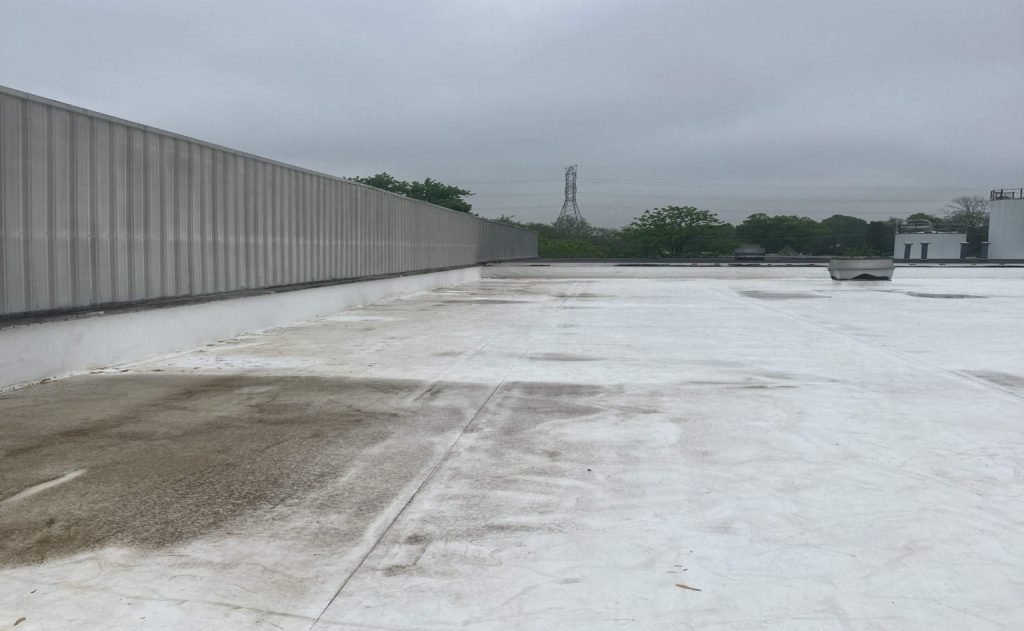
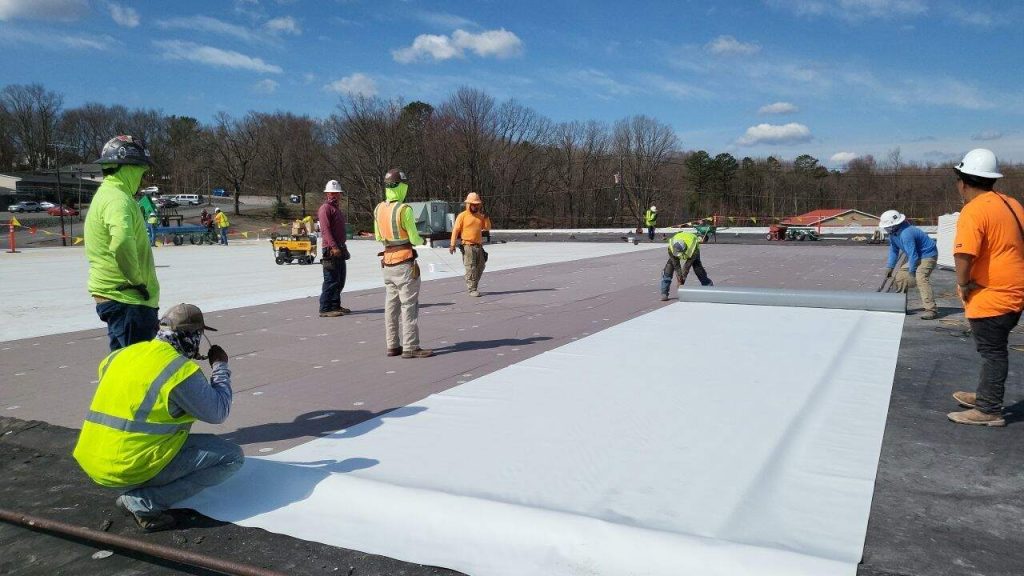
TPO membranes are typically installed in large sheets that reduce the number of seams where leaks might develop. The seams that do exist are heat-welded to create bonds that are actually stronger than the membrane itself. This installation method creates a continuous waterproof surface that protects your commercial property from rain, snow, and ice; all common challenges for Mid-Atlantic businesses.
The white surface of TPO roofing reflects sunlight, significantly reducing heat absorption and enhancing energy efficiency. This reflective quality can lower cooling costs during summer months, making TPO particularly attractive for large commercial buildings like warehouses, retail spaces, and big box stores where energy costs are a major operational expense.
With a lifespan of 20-30 years and relatively low maintenance requirements, TPO represents an excellent value per square foot compared to many traditional roofing materials.
3. EPDM (Ethylene Propylene Diene Monomer)
EPDM roofing, sometimes called rubber roofing, has been a reliable option for commercial flat roofs for over 50 years. This synthetic rubber compound creates a durable, waterproof membrane that stands up exceptionally well to the Mid-Atlantic’s freeze-thaw cycles and UV exposure.
Durability Features:
- Over 50 years of proven performance
- Maintains flexibility in extreme temperature variations
- 25-30 year lifespan with proper maintenance
What makes EPDM a popular choice for commercial property owners is its remarkable durability. The material resists deterioration from sunlight and remains flexible even in extreme temperature variations, a crucial factor for our region where a single day might see temperature swings of 30+ degrees.
EPDM roofs can last 25-30 years with proper maintenance, representing excellent value over the lifetime of the roof. For businesses concerned about regular foot traffic on their roof for equipment maintenance, EPDM offers excellent puncture resistance when installed with proper substrates.
4. PVC (Polyvinyl Chloride) Membrane
PVC membrane roofing has earned its place among the most durable types of commercial flat roofs through decades of proven performance. This thermoplastic single-ply roofing material creates a watertight barrier that’s particularly well-suited to restaurants, laboratories, and other commercial properties where chemicals might come in contact with the roof surface.
Specialized Applications:
- Ideal for restaurants and laboratories
- Chemical resistance for grease and industrial exposure
- Hot air welded seams create monolithic surface
The hot air welded seams of PVC membrane create a monolithic surface that prevents water infiltration, a critical feature in the Mid-Atlantic where heavy rain and snow can quickly expose any roofing weaknesses. The material itself resists chemical exposure, making it ideal for buildings with kitchen exhaust systems or industrial processes that emit greases or chemicals.
PVC roofing also offers impressive sustainability credentials. The material is recyclable at the end of its service life, and its high reflectivity earns it Energy Star ratings for energy efficiency. Many PVC roof systems can accommodate solar panels, allowing forward-thinking businesses to further reduce energy costs.
With lifespans commonly exceeding 20 years in the Mid-Atlantic climate and excellent resistance to fire, chemicals, and wind uplift, PVC membrane represents a premium but valuable investment for commercial structures that need superior protection.
Choosing the Best Option for Your Commercial Property
When selecting among types of commercial flat roofs for your Mid-Atlantic business, several factors should influence your decision:
- Building structure and load capacity
- Local climate considerations and weather patterns
- Budget for initial installation and ongoing maintenance
- Energy efficiency goals and potential utility savings
- Expected roof lifespan and warranty coverage
- Compatibility with equipment mounted on the roof
- Local building codes and insurance requirements
Working with experienced BBB A+ Accredited commercial roofing contractors who understand the specific challenges of the Mid-Atlantic region is essential for making the right choice. A reputable commercial roofing contractor will evaluate your building’s specific needs, explain the advantages of different systems, and help you select the type of flat roof that delivers the best combination of performance and value for your situation.
While a complete replacement with one of these durable systems offers the most comprehensive protection, roof coatings can sometimes extend the life of an existing roof when a new roof installation isn’t yet necessary. These coating systems can improve energy efficiency and waterproofing while postponing the need for full roof replacement.
By selecting one of these four durable types of commercial flat roofs and implementing a regular maintenance program, Mid-Atlantic business owners can protect their properties with roofing systems that deliver decades of reliable service, energy efficiency, and protection against our region’s challenging weather conditions.